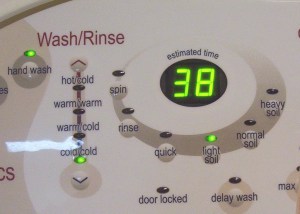
Front-loading washing machines make washing quilts easy, but top loaders can be adapted. Photo by Barb Gorges.
Washing quilts: How to Help Your Quilt Live to 100, Part 10
By Barb Gorges
From Part 9 we have the list of what we need before putting a quilt in a washing machine: color-fast fabric, Shout color-catcher sheets, quilt in good repair (not fragile antique), stains treated, Orvus soap–either from the feed store or the quilt shop, and clean front-loading machine.
Don’t use other laundry products such as bleach or fabric softener.
Orvus soap is a white solid at 65 degrees. Even if it’s warm enough to be a liquid, mix it with half a cup of warm water before pouring into the soap dispenser. A tablespoon is enough for a queen-sized quilt. Use less for smaller quilts–too much and you will be rinsing forever.
Set the machine for cold wash, cold rinse, and hand wash cycle—or the lowest amount of “agitation” possible. Add an extra rinse or plan to send the quilt through a complete wash cycle again without soap. The “Max Extract” spin setting is good.
For top loaders, fill with lukewarm water. Mix in the soap. Turn the machine off and add the quilt. Use your hands instead of the agitation cycle for a few minutes, gently lifting and moving the quilt. Then let the quilt soak 10 minutes before setting the washer controls for the rinse cycle. Substitute your hands again for the agitation in the rinse cycle, then let it spin.
With either machine, when finished, check immediately to see if there was any bleeding. If so, treat with stain remover and rewash immediately (and recheck immediately again)—and plan to dry that quilt fairly quickly in the dryer.
Otherwise, check to make sure the quilt doesn’t sound soapy. If in doubt, run it through another washing again, without soap. Next issue we will discuss the finer points of drying quilts.
Scroll down to read the first nine parts of this series.

 Gorges Quilt Labels